Thoober

Design Goal
Create a Wacky and Surreal Arena Shooter that had a Distinct Sense of Whimsy
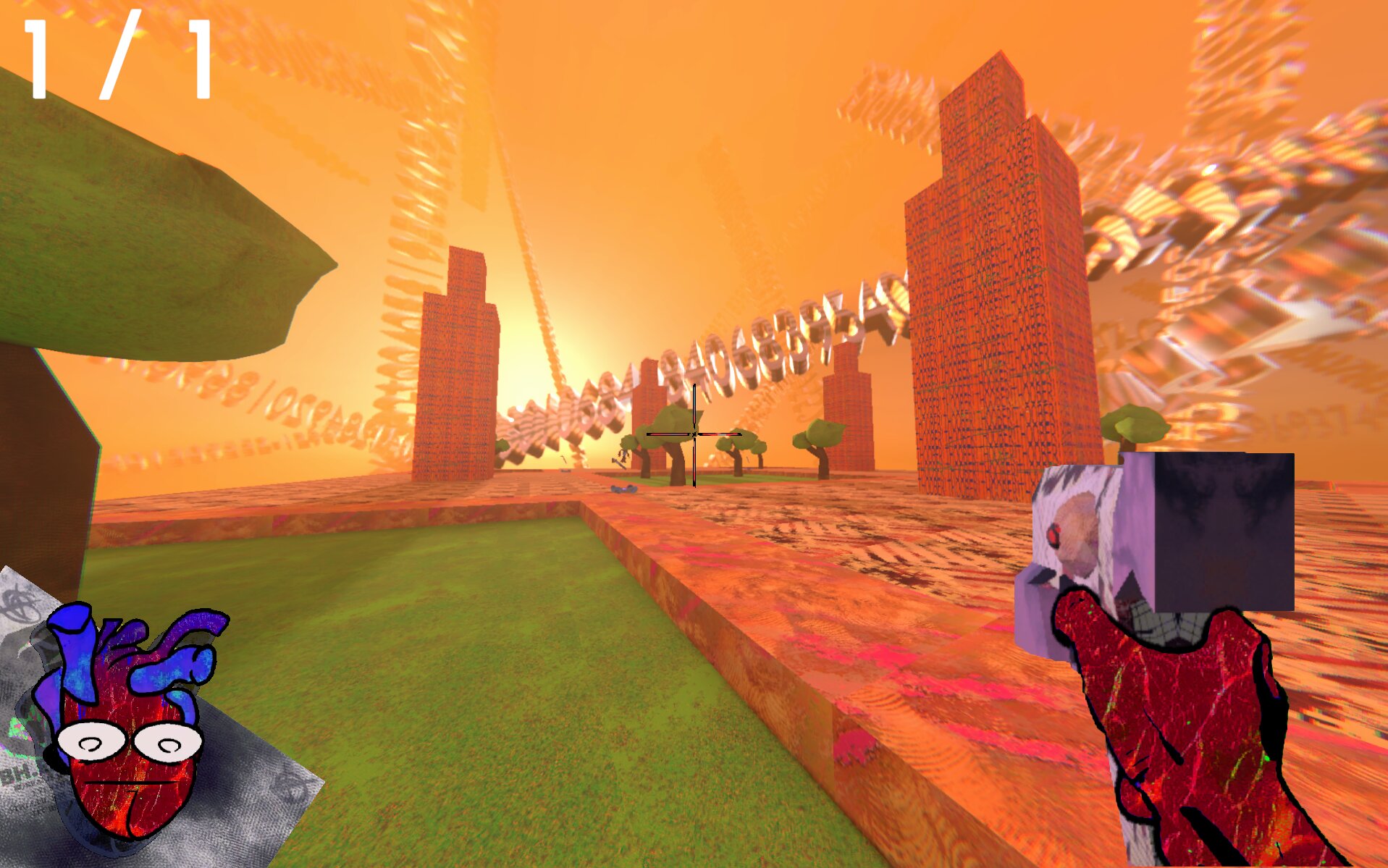
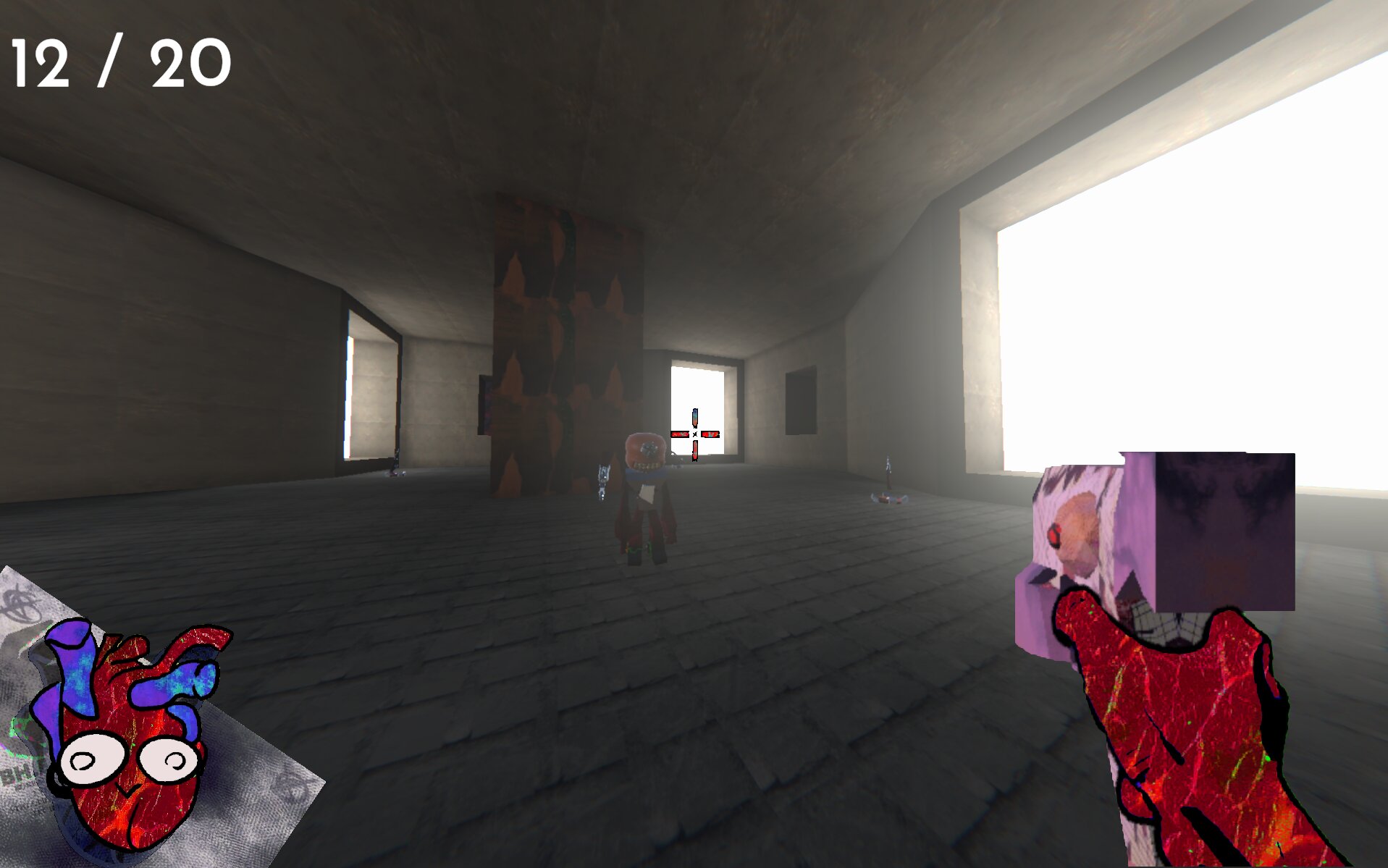
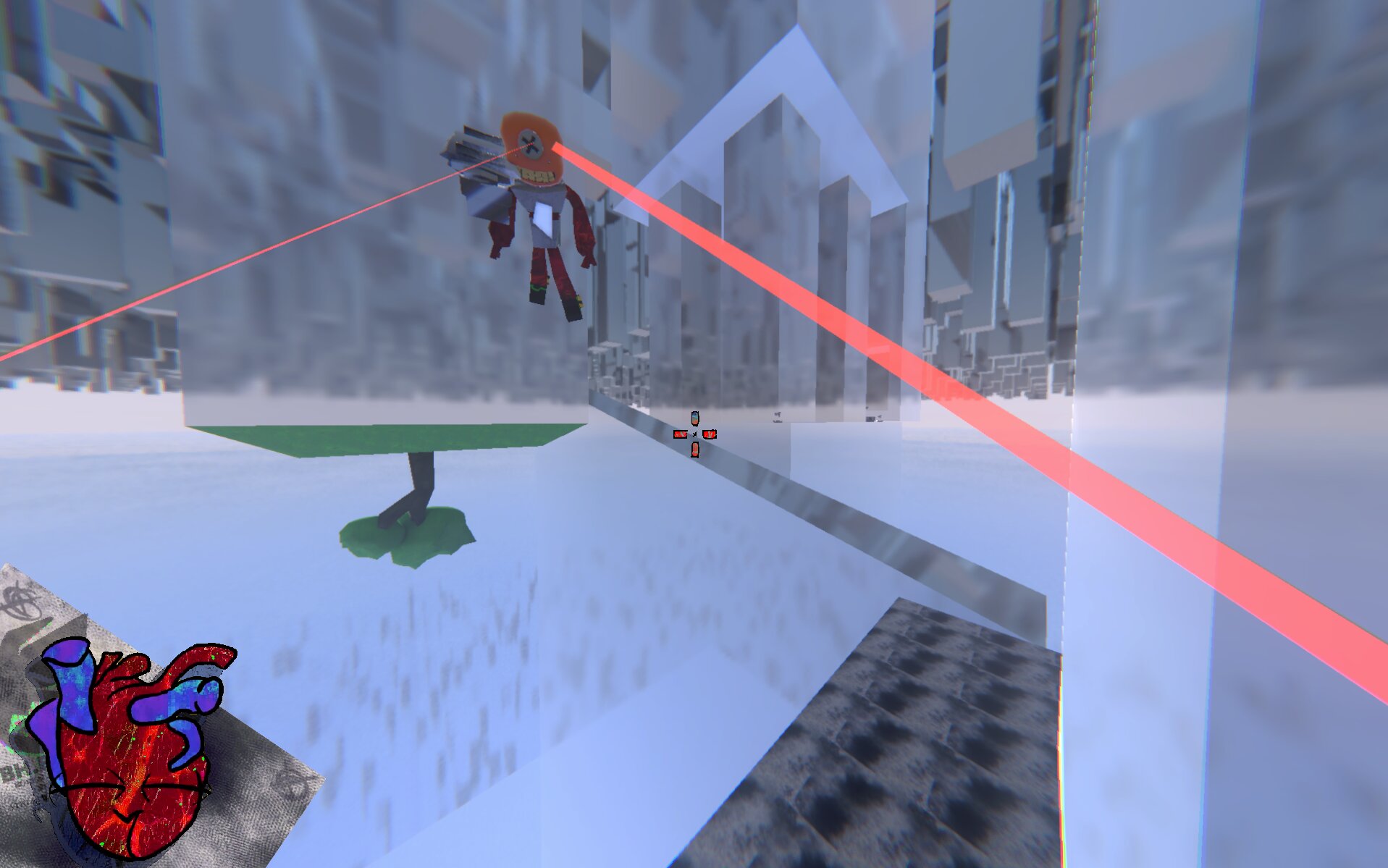
The gameplay of Thoober revolves around 4 player free for all battles across a variety of wacky maps with additional randomized modifiers to put a twist on the gameplay. In these arenas, the players can make use of a plethora of uncoventional weapons such as gym balls, a jousting lance, or even a kitted-out musket with an 8 second long reload. There are tons of other wacky weapons, like a shotgun that shoots bullets that turn into confetti or its evil counterpart that shoots confetti that turns into bullets!
Even though the themeing of Thoober is meant to be zany and over the top, it's important that Thoober is still a competitive game at heart. It's still a high priority that the gameplay feels balanced without being unfair.
After we concluded our early playtesting sessions, the team and I made a conclusion that we needed to have design pillars to focus the future development around. This would be especially important as we headed into Phase Two of development, which hoped to resolve a majority of the feedback that was received during playtesting.
Design Pillars
- Chaotic Fun
- Fair Randomness
- Unserious Competition
- Defy Expectations
- Distinct but Readable Artstyle
Addressing Feedback
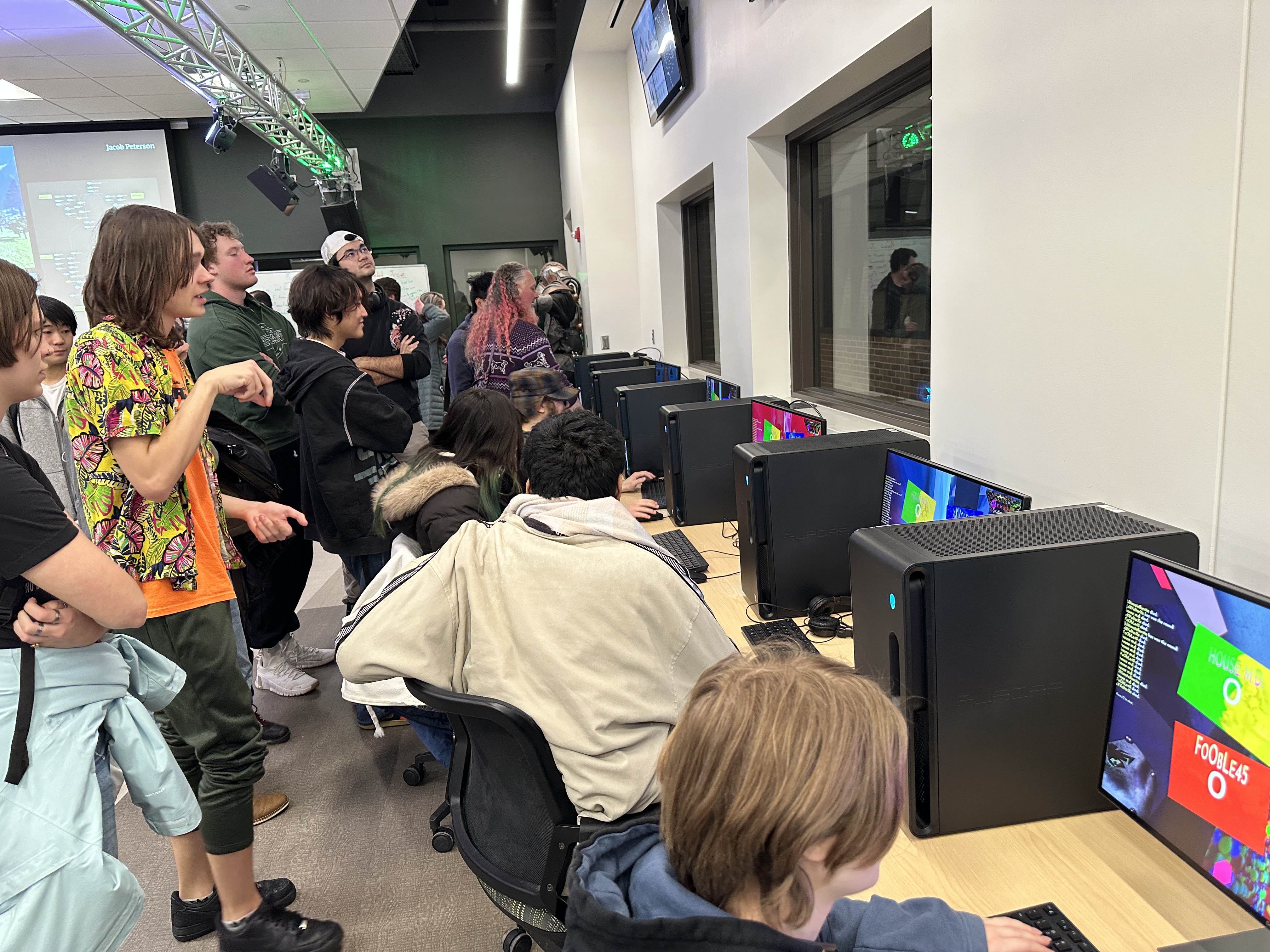
Following the first phase of development and playtesting, we were given the opportunity to be showcased at MSU's Game Showcase. This was a great opportunity to let a new audience of players experience the game, but it also provided us with crucial feedback that can help us make Thoober a better experience. Some major pieces of feedback that stood out in particular are listed below:
Really fun, but only for 15 minutes
- Art Style was unique and fun
- Too much relied on the player's skills
- Some modifier effects were too excessive
- Some maps were drastically different than others
Thoober ended up reaching a much more casual audience than we had anticipated, which affected the feedback received from the playtests. The game looked cartoony and simple at a glance, but ended up being rather complex and hard to comprehend at first. Alongside this, almost every weapon in the game was a hitscan, whcih required a level of percision that was inaccessible for some players. Combining these two factors with the randomized modifier system ended up making the experience feel like a chore instead of a game. Thoober ended up playing more like a tactical shooter such as Counter-Strike instead of a casual cartoony game like Team Fortress 2, which ended up alienating our target audience.
Meeting with the other designers on the team, we came up with the following plan to address feedback, which will be implemented in Phase Two of development which is occuring right now:
- More emphasis on Area-of-Effect weapons rather than hitscan ones
- Modifiers should influence the gameplay, but not control it (outside of special occasions)
- Maps should have a consistent size and not lean too heavily movement skill
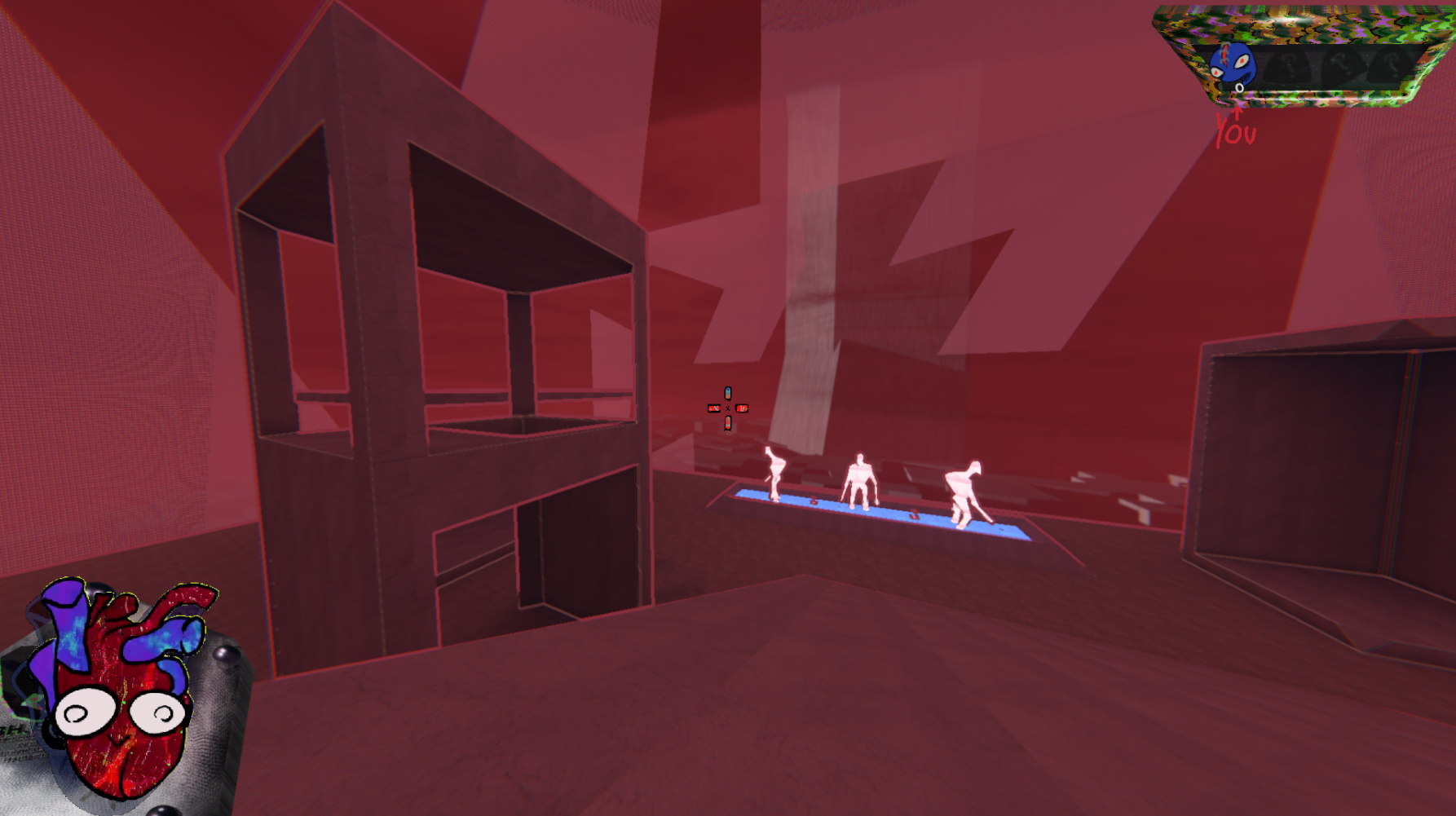
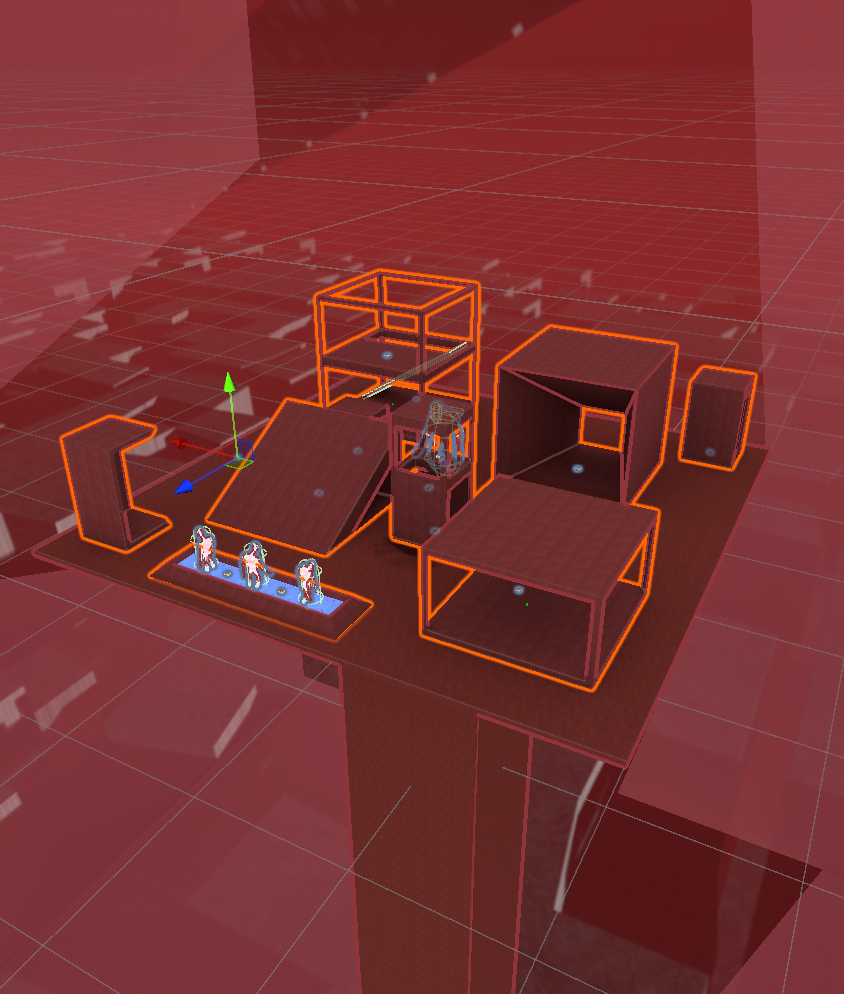
AnarchyJupiter - Level Design and Implementation
Design
AnarchyJupiter was the first detailed level I made for the project, and I wanted it to serve as a way to create unconventional shapes using the Probuilder tool in Unity. The idea was to make a map with an archetype that we did not have in the game yet, which is an urban style environment with elements of verticality. As a result, the concept for AnarchyJupiter began as sprawling, claustrophobic city block. However, this initial concept ended up being too confined for the player to move around freely, and it made the matches take forever as players would be unable to see eachother for more than a few seconds before hiding away again. Players expressed in the feedback that they felt like they were fighting the map, and not eachother. Taking this feedback into account, I redesigned the map from the ground up, trying to keep the urban aesthetic while still opening the map up to faciliate movement and combat. This led to the current design of the level, which still has buildings but instead features a much more open environment situated on top of a giant pillar. This solved the two big pieces of feedback, being that the map was too cramped and cover was too abundant.
Implementation
AnarchyJupiter was implemented using the Probuilder package to model the map. Probuilder behaves similarly to other 3D modeling software, but the main benefit behind learning how to use this tool is that it can be used directly in Unity's sceneview without needing to import a model from a seperate software.
I utlized booleans and inset faces to turn primitives into a more complicated design. I wanted to expand my skillset beyond blockouts by having buildings that could be entered by the player, which I created by using inset faces to chisel away at a large cube to create a more complicated hollow object. This can be seen with the large two-story building, which contains a staircase and open walls to allow the player to traverse through it without impeding their movement, or the watchtower, which has two open sides and two flat sides that allow the player to parkour up to the top to retrieve a powerful weapon. However, a big aspect of level design that I wished to cover with the revamped version of the map was to give the player multiple ways to approach the level. The example of the watchtowers parkour challenge earlier can be avoided if the players climb the ramp structure next to the tower and make a skillful jump to the top.
Level Result
AnarchyJupiter has been well-received by players of all skill levels, and the players who submitted the intial feedback are pleased with how the reworked level design came out.
With the open map layout, players felt like they had an equal amount of cover and open space to fight in. No additional feedback has been suggested for AnarchyJupiter since the new version was pushed to the latest build.
Project Reflection
The development of the game is still ongoing, but I am gaining a lot of experience working on a game project of this scale.
First-hand Game Development Experience
As a beginner game developer, this was my first experience working as a team. Although the team was composed of my older brother and my friends, it was still a serious project where each team member had a specific job that they specialized in. I took this as an opportunity to work in a team based environment and to get accustomed to having weekly meetings to discuss future plans for the games. My goal for this project is to prepare myself for a future career working in a team on game development.
Design
With this being my first major project, I had to decide which area to focus on. I ended up sticking with a designer role, specifically focusing on weapon and level design. The whimsical aesthetic of the game gave me the freedom to experiment with different types of environments and layouts, ranging from an entire tropical island level all the way to an upside down city made of mirrors. The aesthetic of Thoober also applied to its weaponry, which allowed me to design some fan favorite weapons from our playtesting. These include the Rapture, a devastating grenade launcher that launches projectiles that erupt into pillars of light on contact, and the Sternritter, a lance made of concrete and graffiti that flings the player forward when swung. I've learned a lot about level design and weapon design throughout every stage of this project, and I've also learned how to design levels and weapons to fit within the aesthetic of a project.
Programming
Similarly to design, this is my first time programming for a game project. More significantly, this was my first time coding in Unity's language, C#. Due to my experience with Java I was able to pick up the syntax quite quickly. Although my programming work for this project was only a small fraction of my work in total, it was still a great way to get accustomed to programming in Unity for game development. My programming work involved making a basic version of scripts, such as the player controller and projectile weapon script, for testing purposes. These scripts were then improved and optimized later by the more experienced programmers of the team, but I was able to lay the groundwork for their improvements. I hope to become more involved with the programming side of game development as I continue to work on more projects.